
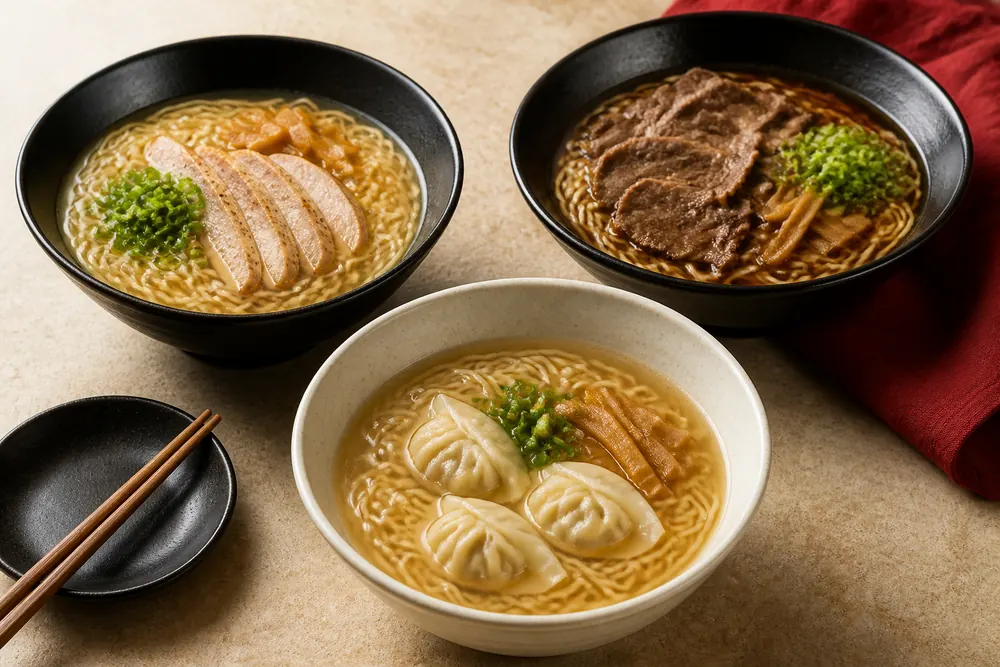
The main difference between chicken, beef and dumpling ramen is not limited to the topping. The aroma of the meat, richness of the broth, texture of the accompaniments and overall satiety also change. When choosing ramen in Ankara, first decide whether you want a lighter or richer broth, then choose between chicken, beef or filled dumplings. Check the menu description, spice level and allergen information together before ordering.
Ramen generally consists of a meat- or vegetable-based hot broth, wheat noodles, a main protein and various toppings. The way the broth is prepared determines much of the dish's character. Even when the same noodles are used, chicken- and beef-based bowls can have noticeably different levels of richness.
Noodle thickness and cooking time affect the mouthfeel. In a delivery order, noodles may soften as they remain in the hot liquid. It is best to eat the dish as soon as possible after delivery or ask whether the noodles and broth can be packed separately.
Egg, spring onion, mushrooms, bamboo shoots and vegetables are common accompaniments, but they are not included in every product. The current product description should be checked instead of relying only on the photograph.
Chicken ramen may be prepared with pieces of chicken and a chicken-based broth. Although it can seem lighter than beef ramen, its actual richness depends on the fat, sauce and broth used. For this reason, the assumption that every chicken ramen is light is not always correct.
Chicken may be served sliced, in pieces or with a crispy coating, and each preparation changes the texture. A crispy product softens after prolonged contact with hot broth; keeping it separate can be useful when this option is available for delivery orders.
You can review the current chicken options on the Rao China menu page and confirm the ingredients and price when ordering.
Beef ramen can offer a more pronounced protein profile because of the meat's distinctive aroma. Thin slices are easy to eat quickly, while thicker pieces create a different chewing texture. The broth does not necessarily have to be beef-based; the product description should clearly state this distinction.
Those looking for a stronger taste may prefer beef options, but salt and fat levels vary from one recipe to another. If the amount of sauce or spice level can be adjusted, add a note to the order and confirm the request with the restaurant.
Dumpling ramen contains filled pieces of dough in addition to noodles. Wontons or similar dumplings may be filled with beef, chicken, shrimp or vegetables. The word "dumpling" alone does not explain what the filling contains.
Having noodles and dumplings in the same bowl creates two different dough textures. This option may feel more layered and filling, although the portion size should still be checked on the product page.
People with gluten or egg sensitivities should ask about both the noodles and dumpling dough. The possible presence of soy, sesame or seafood in the filling should also be considered.
Start by choosing the broth and protein. Then check the spice level, whether the noodles and broth are packed separately, and which toppings are included. If you have an allergy, ask about sauces and cross-contact risk as well as the visible ingredients.
Ramen is prepared to be eaten hot. Waiting after delivery changes the texture of the noodles. If reheating is necessary, follow the restaurant's recommendation; do not leave bowls containing egg or meat at room temperature for an uncontrolled length of time.
Introduction to Korean Cuisine: Tteokbokki, Gimbap and Kimchi Previous
Bulk Ordering at the Office: Combo Menu Guide next
Your email address will not be published. Required fields are marked *

0 Comments