
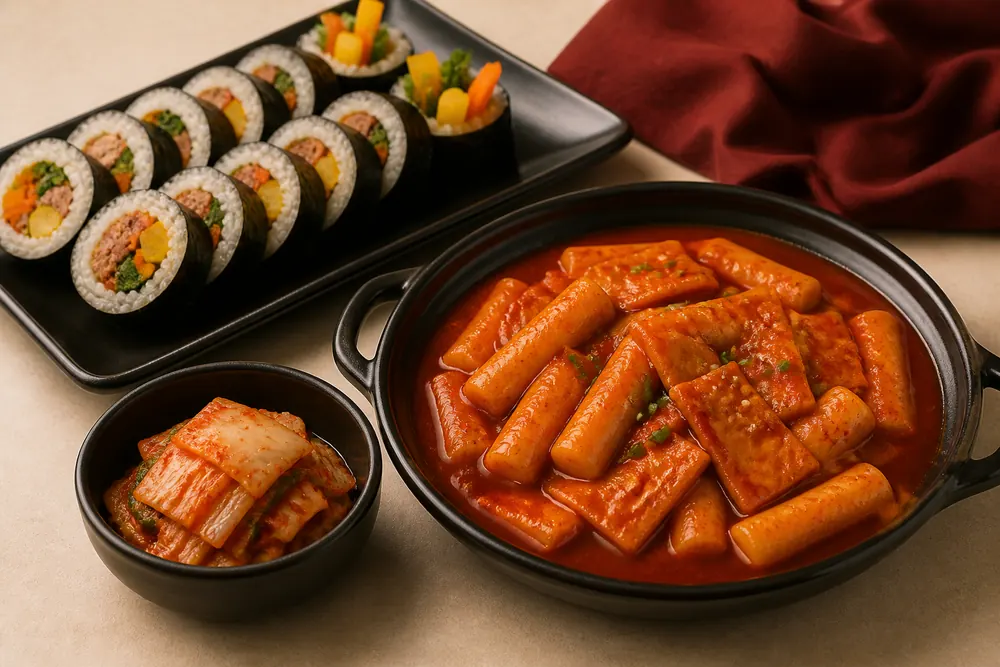
For first-timers of Korean cuisine, tteokbokki, gimbap, and kimchi introduce three different basic structures: rice cake with sauce, wrapped rice meal, and fermented vegetable accompaniment. When choosing Korean cuisine in Ankara, the bitterness level, filling used, fermentation taste and allergens should be evaluated separately. Although these three dishes can be found in the same meal, their preparation, texture and consumption methods are different from each other.
Tteokbokki; It is a hot Korean dish in which cylindrical rice cakes are cooked in sauce. Although it can be searched with different spellings such as "teobokki" in Turkish, the common Latin letter usage is tteokbokki. The main feature of rice cake is its springy and chewy texture; It does not have a structure that breaks easily like noodles.
In most recipes, the sauce is made with fermented red pepper paste called gochujang. Garlic, sugar and different seasonings can be added to it. The balance of bitter and sweet varies by restaurant; The red color alone does not accurately indicate the degree of bitterness. People sensitive to pain should ask about the level before ordering.
When Tteokbokki is consumed hot, the texture of the sauce and rice cake remains more balanced. As you wait, the rice cakes may absorb the sauce and the dish may thicken. This is why it is important not to keep package orders waiting for a long time after delivery.
Gimbap; It is prepared by wrapping rice and various fillings in seaweed called gim and slicing them. Although it looks similar to maki, it is not the same dish. Gimbap rice usually features sesame oil and salt; Rice vinegar-based seasoning is common for sushi rice.
Vegetables, eggs, meat or other cooked ingredients can be used as fillings. Therefore, gimbap should not be associated only with raw fish. Since the content varies depending on the product, fillings should be checked one by one when ordering.
Although gimbap slices seem suitable for sharing, serving information and contents should be verified from the menu. Ingredients such as sesame, egg, soy and seaweed are important for people with special nutritional needs.
Kimchi is a large product group prepared by salting, seasoning and fermenting vegetables. The most well-known example is baechu kimchi made with Chinese cabbage; There are also varieties prepared with radishes and other vegetables. Garlic, ginger, and paprika are common ingredients, but not every recipe is the same.
Kimchi is often served as a small portion accompaniment. Sour, salty, bitter and fermented flavors create contrast with the main dish. The longer the fermentation time, the more pronounced and sour the taste may become.
Kimchi should not automatically be considered vegetarian. Some recipes may use fish sauce or seafood-based seasonings. If there is a vegetarian or vegan preference, the ingredients should be asked to the restaurant.
It is more revealing to choose different structures together instead of several dishes with the same profile in the first try. Sauced and hot tteokbokki, sliced gimbap and a small serving of kimchi; Rice cake allows you to see the difference between rice and fermented vegetables.
The level of pain is not the same for everyone. In group orders, the preference of people sensitive to pain should be taken separately; You should ask the restaurant whether the sauce can be sent separately. Korean style noodle options and other products on the menu can be compared based on their current descriptions.
Soy, sesame, egg, gluten, fish sauce and the possibility of cross-contact should be checked for allergens. It should not be assumed that the product is vegan, gluten-free or allergen-free just based on its name.
What is Bento Menu? How to Order? Previous
Ramen Varieties: Differences Between Chicken, Beef and Dumpling Ramen next
Your email address will not be published. Required fields are marked *

0 Comments