
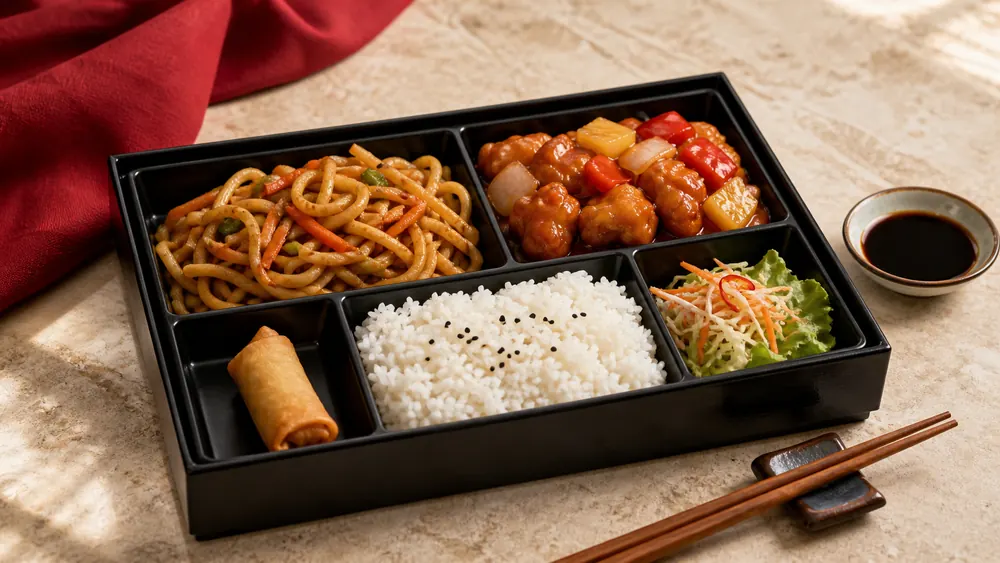
A bento menu is a portioned meal that combines a main course, accompaniments such as rice or noodles, and a small starter in a single compartmentalized presentation. When ordering bento in Ankara, it is necessary to evaluate the main course, carbohydrate accompaniment, starter and allergen information rather than the appearance of the box. Rao China's Çankaya menu includes bento options that combine different ingredients such as sweet and sour chicken, Mongolian chicken, rice, noodles, spring rolls and wontons.
“Bento” refers to the regular presentation of meals for one person in different sections in Japanese food culture. Traditional homemade bentos and current bento menus prepared by restaurants do not have to be the same; Content varies depending on the cuisine and menu concept. The common feature is the planned combination of the components of a meal in a single serving.
Split presentation doesn't just provide visual order. A main course with sauce reduces the mixing of rice, noodles or crispy starters. This way each ingredient can be tasted separately. In package orders, it is important to carry the box horizontally and close the containers tightly to maintain this order.
It is not always correct to think of a bento menu as a "small sample of a few dishes". Some bentos consist of a single main course, a carbohydrate, and a starter. Therefore, when assessing adequacy, one should look not only at the number of compartments in the box, but also at the ingredients described and the person's appetite.
A bento menu generally consists of three basic groups: a protein- or vegetable-heavy main course, a hearty accompaniment such as rice or noodles, and a small starter such as spring rolls or wontons. Some presentations may also include pickles, salad or sauce; but these are not standard for every bento.
The choice of main course determines the character of the bento. Sweet and sour sauce chicken has a more distinct sauce profile, while Mongolian chicken offers a different balance of spices and sauces. Rice may be a simpler accompaniment; Noodles, on the other hand, take up a more prominent place in the meal with their own sauce and texture. Entrees like spring rolls and wontons provide a crunchy or filling counterpart.
The Bento 1 description on the Rao China menu includes green pepper spring rolls and rice. Bento 2 contains Mongolian chicken, rice and wonton. Bento 5 combines sweet and sour chicken, spring rolls and noodles. Product pages should be checked before ordering for current price and availability.
Choosing rice and noodles is not just about filling. Rice can be considered a neutral accompaniment that changes the taste of the sauced main dish less. Noodles, on the other hand, add additional flavor and texture to the meal, depending on the vegetables, sauce and cooking style. With a main course with a distinctive sauce, such as sweet and sour chicken, the two options yield different results.
Those who want a simpler base can try bentos with rice; Those looking for a more intense and layered taste in a single box can look at options containing noodles. However, since portions and content vary depending on the menu, it is not correct to make a definitive generalization such as "noodles are always more satisfying."
Those who want to limit their sauce consumption should clearly write their requests if there is an order note option and ask the restaurant about its applicability. It may not be possible to prepare the sauce for each dish separately. Similarly, exchanging rice or noodles is not a standard right; It is based on the current content of the product and kitchen operation.
First, decide on the main dish. After choosing from sweet and sour chicken, Mongolian chicken, or other options on the menu, check out the rice or noodle accompaniment. Then look at the startup component. Spring rolls with wonton different fillingsSince it has textures and textures, this detail can have an impact on the selection.
Check the product name, description, price and stock status on the live page before ordering. Take into account that the contents of the same numbered bento may change over time. Rely on the current product description instead of relying solely on a previous order or an old image.
If you have allergies or special dietary needs, contact the restaurant directly about chicken, soy, gluten, sesame, egg and sauces used. Gluten may be present in spring roll, wonton and noodle dough; The content of the sauces may also vary depending on the product. The risk of cross-contact cannot be determined from visible materials alone.
Matching each person's choice with the name reduces confusion when ordering for an office or large group. For example, a list can be prepared as “Ayşe – Bento 2”, “Mehmet – Bento 5”. When delivery arrives, the number of boxes, product names and any special notes should be checked before distribution.
Bento offers a planned meal in one serving for people who do not want to choose different plates separately. When ordering during lunch, choosing the main course and accompaniment from a single item can shorten the decision time. The compartmented box also facilitates personal portion distribution without the need for table sharing.
Bento boxes can be distributed on a per-person basis and can provide service during office meetings and team meals. However, it should not be assumed that everyone can consume the same content. Vegetarian preference, allergy, spicy level and sauce request should be asked separately when ordering.
Once the package arrives, hot products should be consumed as soon as possible. Instead of leaving the box at room temperature for a long time, the restaurant's consumption and storage recommendations should be followed. It should also be noted that reheating can change the texture of crispy starters.
Where to Eat Sushi in Ankara? Cankaya Sushi Guide Previous
Introduction to Korean Cuisine: Tteokbokki, Gimbap and Kimchi next
Your email address will not be published. Required fields are marked *

0 Comments