
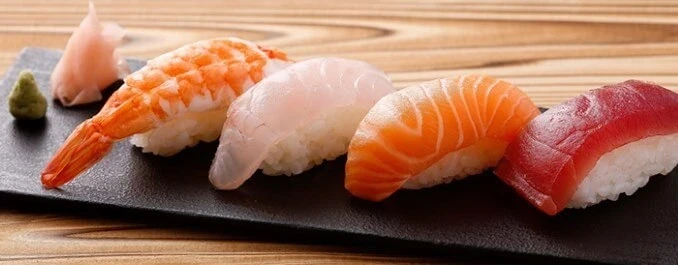
Nigiri is prepared by placing fish, seafood or a different topping on a small portion of hand-shaped sushi rice. Sashimi, on the other hand, is served as appropriately cut slices of fish or seafood, without using rice. Therefore, the two options differ from each other in terms of appearance, portion structure and taste experience.
While rice and toppings are consumed together in nigiri, the texture and flavor of the fish is felt more directly in sashimi. When ordering nigiri or sashimi in Çankaya, in addition to the product name, you should also check the type of fish used, the number of portions and whether the product is raw, cooked or marinated.
Nigiri is one of the Japanese cuisine products created by shaping small amounts of sushi rice by hand and placing fish or other ingredients on it. It is usually served in bite-sized pieces, and the flavor balance created by the rice and the toppings comes to the fore.
The ingredients on Nigiri don't always have to be raw. Fish or seafood can be raw, cooked, lightly processed or marinated. For this reason, one should not draw any definitive conclusions about the way the product is prepared just by looking at the name "nigiri".
Sake Nigiri on the Rao China menu is stated in the current product description as two pieces of salmon nigiri. The term “sake” may be used for salmon on Japanese cuisine menus, where it refers to nigiri pieces of salmon placed on rice.
The two-piece portion can be used by those who want to try nigiri for the first time or are looking for a small complement to different types of sushi. However, the adequate portion size varies depending on the person's appetite and other items in the order.
Those who want more variety or a portion suitable for sharing can check out the Nigiri Set option. The current product description states that the set contains a total of 11 nigiri.
In set orders, not only the total quantity but also which fish or seafood are included is important. If the current distribution is not clearly stated on the product page, fish types, possible allergens and personal preferences should be confirmed with the restaurant before ordering.
Sashimi is prepared by slicing fish or seafood in appropriate thickness and serving without using rice. Since there is no rice, the texture, cut and natural aroma of the fish are felt more clearly in the taste of the product.
Nigiri has a different balance of taste and texture because the same type of fish is served with sushi rice. Therefore, salmon nigiri and salmon sashimi do not offer exactly the same eating experience, even though they are options using the same fish.
Sake Sashimi is included in the Rao China menu as three salmon sashimi. Since it is served without using rice, it can be preferred by those who want to experience the texture and aroma of salmon more directly.
Since Sake Nigiri is offered in two pieces and Sake Sashimi is offered in three pieces, these two products should not be compared solely on the name or fish used. The number of servings and availability of rice should also be taken into account when choosing.
The most obvious difference is the brass. Nigiri sushi is prepared on a rice base, while sashimi is served without rice. This changes both the feeling of the portion, the texture, and how directly the flavor of the fish is perceived.
Nigiri offers a more structured, bite-sized sushi experience, while sashimi is a simpler serving style for those who want to enjoy the fish on its own. The type of fish used in both products and the method of preparation may vary on a product-by-product basis.
Those who want a balanced and bite-sized sushi experience consisting of rice and fish can choose nigiri. For those who want to evaluate the texture and aroma of fish independently of rice, sashimi may be more suitable.
People trying it for the first time can try several different varieties in small portions instead of buying large portions of a single product. For large orders, sharing options such as nigiri sets can make it easier to try different flavors together.
Soy sauce is a commonly used accompaniment to nigiri and sashimi. However, completely submerging the piece in sauce can overwhelm the natural flavor of the fish and significantly increase the salt content of the dish.
Using small amounts of sauce can help you feel the flavor of the product better. People with allergies should also take into consideration that soy sauce may contain wheat.
When ordering nigiri or sashimi in Çankaya, it is useful to first check the type of fish used and the number of portions. People who do not want to consume raw fish should clarify whether the product is raw, cooked or marinated before ordering.
If an order is placed for more than one person, the products of people who do not prefer raw products can be kept separately. Possible allergens such as fish, shellfish, soy, sesame and wheat should also be evaluated on a product and sauce basis.
It is important to maintain the appropriate temperature and cold chain for raw or lightly processed seafood. After the order is received, the product should not be kept in a hot environment for a long time and should be consumed as soon as possible.
If any abnormality in odor, color or texture is noticed, the product should not be consumed. In cases where there is any doubt about the suitability of raw seafood consumption for personal health status, it would be better to seek advice from a healthcare professional.
What is Gimbap? Beef, Classic and Vegan Gimbap Guide Previous
How to Choose a Sushi Set? 16, 32 and 72 Piece Set Guide next
Your email address will not be published. Required fields are marked *

0 Comments